Overview
MailSubsystem Core is a local-first email intelligence application written in Rust. It connects to an IMAP mailbox, stores runtime state in PostgreSQL, and runs a fault-tolerant agent pipeline for classification, summarization, threat detection, folder recommendation, and filing.
Who it is for
Developers and technical operators who want serious inbox automation they can audit. It is intentionally different from managed AI inbox products: the Core runs on your hardware, with your database, your model provider choices, and logs you can inspect.
Status
| Area | Current direction |
|---|---|
| License | AGPL v3 intended for OSS publication. |
| Repository | github.com/iamcobolt/MailSubsystem.git |
| Runtime | Rust application with PostgreSQL source of truth and IMAP integration. |
| Hardening | Phase 5 focuses on production readiness, sandbox safety, observability, and reliable autonomous operation. |
Architecture
The current implementation is a single CLI binary. The intended product direction is a long-running daemon with this expanded flow:
IMAP IDLE → Ingest → Analyze → Embed → Action Dispatch → Location → FileThe shorter README workflow remains useful for day-one operation:
Sync → Analyze → Locate → File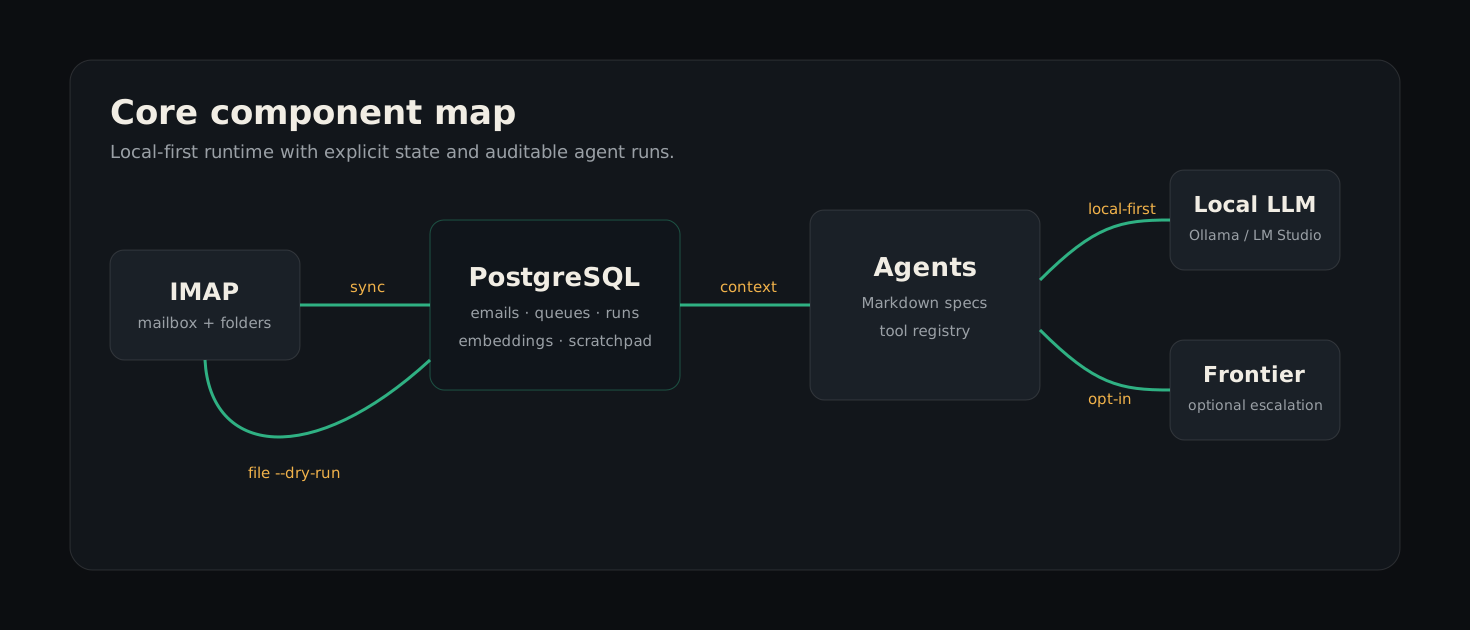
Core owns intelligence
LLM workflows, RAG, classification, summarization, threat detection, action dispatch, folder recommendation, and filing logic.
PostgreSQL owns state
Email records, folders, durable queues, agent checkpoints, analysis output, embeddings, sender behavior, and audit-friendly run history.
Agents are declarative
Specs use Markdown conventions and shared runtime behavior, so prompt and policy changes don't require rewriting the binary.
Models are pluggable
Local models through LM Studio or Ollama are the preferred posture; hosted providers can be configured for selected escalation paths.
Next
Continue to Quick start to build the binary and run your first commands.